


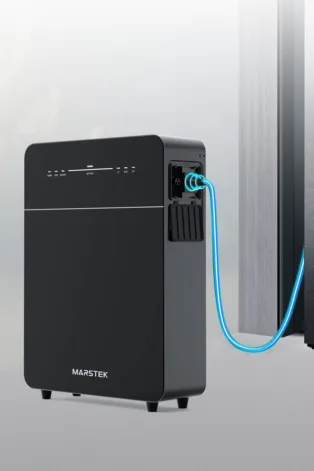
Plug and Play Home Batteries
Plug & Play home batteries make energy storage easy. They connect to solar panels or the power grid without complex installation, thus ensuring lower costs and more independence.

2 × 460W bifacial solar panels + Marstek 800W microinverter. £599 inc. VAT & UK delivery UK stock • Delivery in 2–3 working days
Plug and Play Solar Kit
UK STOCK NOW AVALIABLE! The Marstek Venus E 3.0 is a powerful all-in-one home battery.
Marstek
No installers, no scaffolding, no waiting. Start generating your own clean energy in under 10 minutes-straight into any standard UK socket.
Plug and Play Home Batteries
No limits on power. No compromise on choice.
Marstek
Home batteries make it possible to store solar energy smartly and use it later. This way, you benefit from lower costs and more independence.
Stackable Home BatteriesPlug and Play home batteries are compact energy storage systems designed for fast and simple installation without complex wiring or major electrical work. They connect directly to a standard power outlet, allowing homeowners to store electricity from solar panels or low-cost off-peak grid energy for later use.
These smart battery systems help increase energy independence, reduce reliance on the grid, and lower electricity costs while providing flexible, user-friendly home energy storage for modern households.
 View product
Marstek
The Marstek Venus E 3.0 is a powerful 5.12 kWh all-in-one home battery storage system with an integrated inverter. Designed to reduce electricity bills and maximise solar energy usage, it features intelligent app control, durable LiFePO₄ battery technology and expandable storage capacity. Ideal for homes looking for smarter, more affordable energy storage.
Marstek
The Marstek Venus E 3.0 is a powerful 5.12 kWh all-in-one home battery storage system with an integrated inverter. Designed to reduce electricity bills and maximise solar energy usage, it features intelligent app control, durable LiFePO₄ battery technology and expandable storage capacity. Ideal for homes looking for smarter, more affordable energy storage.
Select Variant
 View product
Marstek
The Venus A is a compact all-in-one home battery with a modular design of up to 12.72 kWh, designed for efficient energy use and reliable backup.


Marstek
The Venus A is a compact all-in-one home battery with a modular design of up to 12.72 kWh, designed for efficient energy use and reliable backup.
 View product
Zendure
High-power AC-coupled retrofit battery for homes with existing rooftop solar — 2400W bidirectional output, 2.4 kWh built-in, AI-driven HEMS, expandable to 16.8 kWh with AB3000L batteries.


Zendure
High-power AC-coupled retrofit battery for homes with existing rooftop solar — 2400W bidirectional output, 2.4 kWh built-in, AI-driven HEMS, expandable to 16.8 kWh with AB3000L batteries.
Select Variant
 View product
Zendure
Zendure's flagship balcony and rooftop storage system — 2400W bidirectional AC output, 4x MPPT for up to 3000W DC solar input, 2.4 kWh built-in LFP battery, AI-driven HEMS, expandable to 16.8 kWh.
Zendure
Zendure's flagship balcony and rooftop storage system — 2400W bidirectional AC output, 4x MPPT for up to 3000W DC solar input, 2.4 kWh built-in LFP battery, AI-driven HEMS, expandable to 16.8 kWh.
Select Variant
 View product
Sunport
Portable 200W foldable solar panel with high-efficiency monocrystalline cells, USB-C and USB-A charging ports, plus MC4 output for power stations, batteries and off-grid systems. Ideal for camping, caravans, motorhomes, boats and emergency backup power.


Sunport
Portable 200W foldable solar panel with high-efficiency monocrystalline cells, USB-C and USB-A charging ports, plus MC4 output for power stations, batteries and off-grid systems. Ideal for camping, caravans, motorhomes, boats and emergency backup power.
Select Variant
Whether you rent a flat in Manchester or own a house in Cornwall, there's a kit built for your space.
Plug & Play home batteries make energy storage easy. They connect to solar panels or the power grid without complex installation, thus ensuring lower costs and more independence.
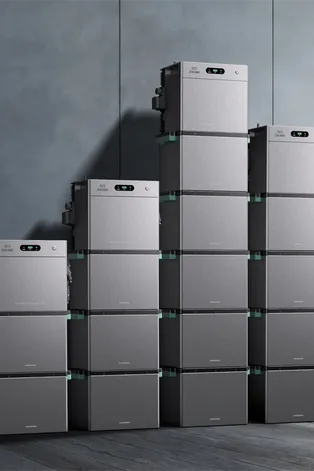
Discover stackable home battery systems designed to grow with your energy needs. Expandable, efficient, and future-ready, these modular storage solutions help maximise solar self-consumption, reduce electricity costs, and provide reliable backup power for your home.

Portable power stations provide a reliable power supply anytime, anywhere. They are compact, powerful and easy to carry. Ideal for home, on the road or off-grid use, so that there is never a lack of energy.
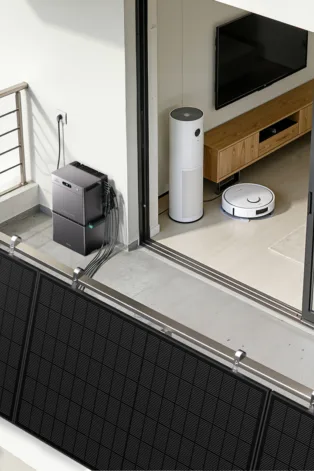
Lightweight, flexible and easy to assemble. Ideal for applications where standard panels do not fit: campers, boats, temporary locations or mobile units.
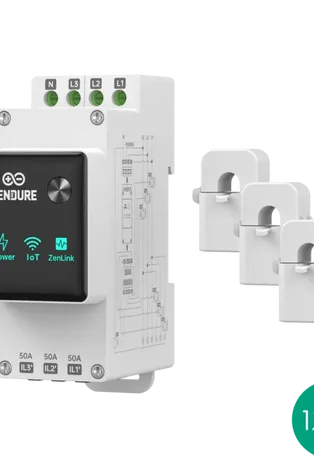
For systems that have to work smart, safe and complete. From measuring coils to smart boxes, indispensable accessories for monitoring, coupling and backup.
“Installation was straightforward, even for someone who's not a professional installer. It's truly a plug and play system. The build quality is excellent — everything feels robust and well-engineered.”
We've partnered with five established brands to bring the best solar products to the UK market.

Plug and Play Batteries, Plug and Play Solar
Home & Balcony Batteries
Home Energy Storage

View Solar Panels

View Plug and Play Solar Kits
Solar panels contain photovoltaic (PV) cells made from silicon. When sunlight hits them, it knocks electrons loose, creating a flow of direct current (DC) electricity. On its own, DC power can't run your kettle — your home runs on alternating current (AC) at 230V/50Hz.
That's where the micro-inverter comes in. Built into every plug-and-play kit, it converts the panel's DC output into 230V AC electricity in real time. Plug the inverter into a standard socket, and the power flows straight onto your home's circuit — your appliances draw from it first, before pulling anything from the grid. Your meter effectively runs slower (or backwards on a smart meter with SEG enabled).
Payback period depends on your kit size, your electricity tariff, how much you self-consume, and whether you add a battery. As a general guide:
400W balcony kit (no battery) — £299: Generates around 300–380 kWh/year in the UK. At 25p/kWh self-consumed, that's £75–£95/year saved. Payback: 3–4 years.
800W garden kit + 2.5 kWh battery — £699: Generation rises to 600–750 kWh/year. With improved self-consumption from the battery, savings of £180–£240/year are realistic. Payback: 3–4 years.
1200W rooftop kit + 5 kWh battery — £999: At 25p/kWh and high self-consumption, savings of £280–£360/year. Payback: 3–4 years.
Yes — solar panels generate power from daylight, not direct sunshine. Even on a heavily overcast UK day, panels typically produce 10–25% of their rated output. On a bright but cloudy day, output can reach 50–80%.
The panels we stock use monocrystalline silicon with high-efficiency cells rated for low-irradiance performance — specifically selected because UK annual irradiance averages around 1,000–1,200 kWh/m², lower than southern Europe but still economically viable at current energy prices.
Yes. Plug and play solar systems are legal in the UK under Engineering Recommendation G98, which governs the connection of small-scale generators (up to 3.68kW single-phase) to the distribution network. For systems below 800W, many installers operate under a simplified self-notification process — in some cases, no formal notification is required at all.
Our kits are designed to comply with G98 from the outset. Every micro-inverter includes automatic anti-islanding protection, which shuts the system off instantly if the grid goes down — a legal requirement that protects engineers working on power lines.
Important The rules around socket-connected solar are evolving. We keep our compliance guide updated and will tell you exactly what applies to your specific kit and location when you order.
It depends on the size of your system. Under G98, systems up to 3.68kW require notification to your DNO — but this is a notification, not an application for approval. You inform them after installation, not before. They don't get a veto.
For very small systems under 800W, the regulatory position is less clear-cut and many households proceed without formal notification, treating the inverter like a plug-in appliance. We recommend notifying in all cases for peace of mind — and we help you do it as part of our onboarding process.
Your DNO is the company that owns the power lines in your area (e.g. UK Power Networks, Northern Powergrid, Western Power Distribution). It's different from your energy supplier.
Yes, and in fact a smart meter makes the system work better. A SMETS2 smart meter (the current standard in UK homes) records both import and export in half-hour intervals. When your solar panel generates more than you're using at that moment, the surplus is logged as an export — and if you're registered with the Smart Export Guarantee (SEG), your energy supplier will pay you for it.
If you add a home battery (like the Zendure SolarFlow or Marstek Venus), you can store that surplus instead of exporting it, using it later when the panels aren't generating. A smart energy monitor like the Everhome EcoTracker lets the battery know in real time exactly how much power your home is drawing, so it can discharge precisely what's needed — no waste, no over-export.
For safety reasons, standard grid-tied inverters (including most plug-and-play units) shut down automatically when the grid goes down — this is the anti-islanding protection described above. So a basic plug-and-play solar kit will not power your home during a blackout.
However, some battery systems in our range — specifically the Marstek Venus E and Zendure SolarFlow 2400 AC — include a backup output socket that switches over in milliseconds (20ms or less) during a power cut, independent of the grid. Devices plugged into this socket continue running on battery power through the outage.
Yes, with LFP chemistry batteries (which all our systems use). LFP cells do not produce toxic or flammable off-gassing under normal operation and have a stable electrochemical structure that resists thermal runaway — the failure mode behind most lithium battery fire incidents, which typically occur in NMC or NCA batteries under abuse conditions.
The Marstek Venus E and Zendure SolarFlow battery modules are both IP65-rated (dust-tight and jet-water resistant), operate across a wide temperature range (–20°C to +55°C), and include multi-layer battery management systems (BMS) that monitor cell voltage, temperature, and current in real time, shutting the system down if any parameter goes outside safe limits.
They are designed and certified for indoor domestic installation — living rooms, utility rooms, garages, and hallways are all appropriate locations.
No — since February 2024, the UK government extended its 0% VAT relief to include standalone battery storage systems, making batteries eligible for zero VAT whether purchased alongside solar panels or independently as a retrofit.
Solar panels and their associated equipment (mounting hardware, inverters, cables) have carried 0% VAT since April 2022. This relief applies to residential installations and is set to remain in place until March 2027, after which the standard 20% rate would reapply unless extended.
Average Annual Saving
Plus Years of Experience
Brand Partnerships
The latest news and updates from Certus Energy.

Certus Energy attended Solar & Storage Live Birmingham 2026, meeting with our partners MARSTEK, Zendure and MW Energies to discuss the latest developments in home battery storage and plug-in solar for the UK market.

Certus Energy joined EcoFlow at Battersea Power Station for the UK unveiling of its next-generation home energy technology, including the new STREAM 5000 Series. We take a closer look at what the new system could mean for UK households.

From 27 August 2026, a major change to UK solar rules will make it easier for households to generate their own electricity using simple plug-in solar systems.